Seven Sacred and Industrial Spaces Where UK Studios Still Breathe
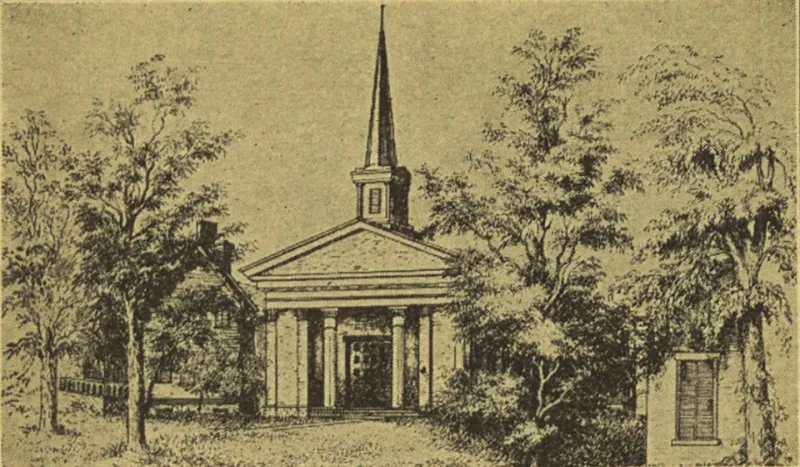
Photo: by Brown, Henry Collins, Public domain, via Wikimedia Commons
There’s a particular smell to a listed building that’s been turned into a studio: old timber, stone dust and the faint ghost of incense or machine oil. It’s the smell of a space that has already lived several lives. Across the UK, producers are recording in former chapels, textile mills, libraries and ironworks — buildings protected by heritage law, which means you can’t just bang up a stud wall and call it a control room.
That constraint is also a gift. Listed buildings come with acoustic quirks you can’t design from scratch: irregular surfaces, enormous volumes, resonant timber. Here are seven spaces that prove preservation and production can coexist — and what each can teach you about recording in rooms that were never meant to be studios.
1. The Nave, Bristol
Heritage: A Victorian church, deconsecrated in the 1970s, now a live room and control room with a small booth in the vestry. The stone arches and original pews are still in place; the pews act as diffusers.
Acoustic quirk: A natural reverb tail of roughly 3.2 seconds, but only in the long axis. Turn 90 degrees and it tightens to a warm 1.8 seconds. Engineers learn to place drums on the short axis and vocals on the long axis.
Lesson: Don’t fight a big room with foam. Use movable gobos, rugs and mic placement to shape the decay. The Nave’s owners keep a rolling wall of old theatre drapes for exactly this reason.
2. Mill No. 6, Todmorden
Heritage: A former cotton mill, Grade II listed, with cast-iron columns and a wooden floor that has absorbed two centuries of oil and dust. The studio occupies the top floor, where the spinning mules once ran.
Acoustic quirk: Flutter echo between the parallel brick walls, tempered by the irregular ceiling joists. The floor is springy, which adds a low-end bloom to drums but can make bass guitar sound muddy.
Lesson: Embrace irregularity. Mill No. 6’s engineers lean into the flutter for lo-fi vocals and use a tight cardioid pattern to avoid the bass boom. Sometimes the ‘flaw’ is the sound.
3. St Cuthbert’s, Edinburgh
Heritage: A former chapel with a vaulted plaster ceiling, stained glass and a stone floor. The building is Category B listed, which meant every cable run had to be reversible.
Acoustic quirk: The plaster ceiling reflects high frequencies beautifully, but the stone floor creates a hard, bright slap. Structural noise from the street is a constant battle.
Lesson: Isolate structure-borne noise first. St Cuthbert’s floats its drum riser on rubber pads and uses a separate power supply for the recording gear. You can’t fix a listed building’s bones, but you can decouple your gear from them.
4. The Weaving Shed, Dundee
Heritage: A jute mill with a sawtooth roof and enormous north-facing windows. The studio is on the ground floor, surrounded by original machinery that has been sealed off but not removed.
Acoustic quirk: The sawtooth roof creates a diffuse, airy decay that flatters acoustic instruments. The height (over 8 metres) means you can record a string section without early reflections crowding the mics.
Lesson: Use height, not absorption. The Weaving Shed keeps the upper volume open and relies on distance and mic choice. For close-mic’d vocals, they build a temporary tent of moving blankets — cheap, effective, removable.
5. Chapel Audio, Cardiff
Heritage: A Welsh chapel with a slate floor, painted timber gallery and a pulpit that now holds a mixing desk. The building is listed, so no holes in the fabric.
Acoustic quirk: The gallery creates a natural ‘balcony’ effect, with early reflections arriving from above. The slate floor is bright; the timber gallery is warm. It’s a split personality.
Lesson: Movable treatment is your friend. Chapel Audio uses free-standing bass traps on wheels and a modular cloud system hung from existing beams. Everything can be struck and stored when the space is used for community events.
6. The Old Library, Manchester
Heritage: An Edwardian library with mahogany shelving, a glass dome and a tiled floor. The studio occupies the reading room; the books are long gone, but the shelves remain as diffusers.
Acoustic quirk: The glass dome creates a shimmering high-end that can be gorgeous on strings and horrible on cymbals. Humidity swings affect tuning and timber.
Lesson: Control humidity, not just sound. The Old Library runs dehumidifiers and keeps a hygrometer in the live room. In heritage spaces, climate control is part of acoustic control.
7. Ironworks, Sheffield
Heritage: A former steelworks office block, listed for its industrial significance. The studio is in the old drawing office, with steel-framed windows and a concrete floor.
Acoustic quirk: The steel frame transmits vibration efficiently, which is great for monitoring and terrible for isolation. The room is dead-ish, with short reflections and a tight low end.
Lesson: Separate live and control rooms if you can. Ironworks built a floating control room inside the shell, using resilient channels and a separate ventilation system. The live room stayed raw; the control room became a neutral reference.
What these rooms teach us
The common thread is respect. Listed buildings force you to work with what’s there — to treat acoustics as a conversation rather than a demolition job. You learn to use movable treatment, to decouple gear, to embrace irregular surfaces and to plan for humidity and vibration. You also learn that ‘acoustic preservation’ isn’t just about heritage; it’s about keeping the character that makes a room worth recording in.
At TrackRooms, we’ve recorded in enough pristine, purpose-built studios to know that perfect isn’t always interesting. The buildings on this list are imperfect, awkward and occasionally infuriating. They’re also alive. And that’s the lesson: the best studio isn’t the one with the flattest response. It’s the one that makes you want to press record.