Before the First Take: How UK Studios Can Make Access Riders Work
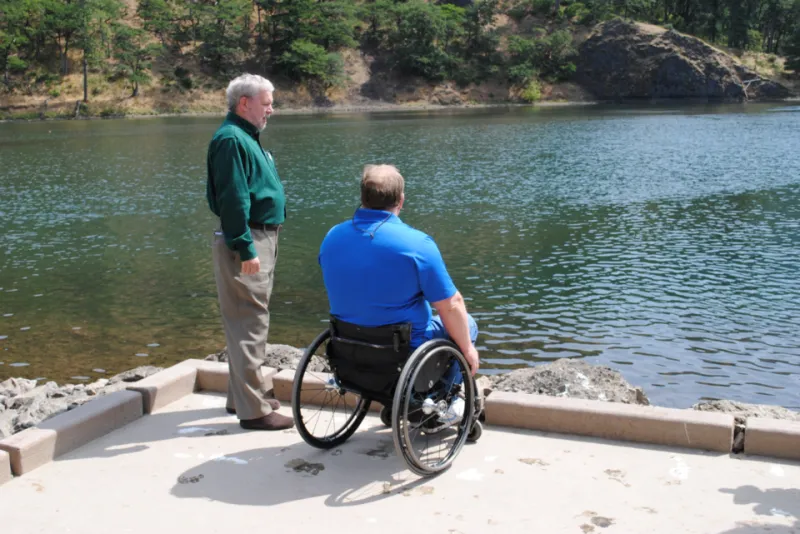
Photo: Cheri Anderson/USFWS, Public domain, via Wikimedia Commons
There was a time when the rider that landed in a studio inbox was mostly about valve amps, drum shells and the brand of tea in the green room. Now, increasingly, there is a second document attached. Sometimes it is one page; sometimes it is a carefully written list covering mobility, fatigue, sensory needs, hearing, vision or a medical condition that fluctuates from day to day. It is an access rider, and it is changing the way UK studios think about the room before anyone has plugged in a single cable.
The shift is not about studios being asked to become hospitals or hotels. It is about the practical gap between a welcoming attitude and a working policy. An artist can be told, sincerely, that a studio is “accessible” and still arrive to find a narrow Victorian doorway, a toilet up two steps and a monitoring position that assumes everyone can stand for six hours. The access rider is simply the document that makes those gaps visible before the session, which is exactly when they are cheapest to solve.
What an access rider is actually asking for
It is a mistake to read “access” as shorthand for wheelchair access alone. A rider might ask for a step-free route from the loading bay to the live room, but it might also ask for a quiet space to decompress, adjustable lighting, captioning for a hybrid session, a chair with back support at the desk, or advance warning about loud talkback in the cue system. For a session player with a chronic condition, the request might be about scheduling: shorter days, a later start, or a guaranteed break rather than a heroic twelve-hour push.
That variety is why a generic statement on a website — “we are committed to accessibility” — does not get very far. Useful access information is specific. It tells someone what the entrance is like, where the nearest accessible toilet is, whether the live room floor is level, how wide the control-room doorway is, and who to call if the plan changes. It is closer to a venue technical spec than a mission statement.
Start with an honest walk-through
Before writing a policy, studios need to audit the building as a customer would experience it. That means arriving at the front door, not the control room. Walk the route from the street, the car park or the nearest station. Note thresholds, steps, gravel, uneven paving, lighting and door weights. Check whether the accessible loo is genuinely accessible or simply the one with the widest door. Look at the monitoring position: can the desk be raised or lowered, is there room for a wheelchair or a support chair, and can the producer and artist both see each other without someone craning around a screen?
In older UK buildings — the converted mills, mews garages, railway arches and Victorian terraces that make up so much of the studio stock — the honest answer may be “not fully”. That is not a failure if it is communicated clearly. A studio that says “step-free to the live room and control room; accessible toilet is a 90-second walk via a level route; no hoist on site” is more useful than one that claims universal access and leaves the artist to find out otherwise on the day.
The small fixes that pay off
Access improvements often get parked because they are imagined as capital projects. Some are. A permanent ramp or a fully reconfigured bathroom can be expensive, and listed-building consent can slow things down. But plenty of useful fixes sit in the hundreds rather than the tens of thousands. A portable ramp for a single threshold, a height-adjustable desk, a decent support chair, grab rails, better task lighting, a doorbell with a visual alert, or a quiet corner with a sofa and a kettle can all make a session more workable.
Costs vary, but a portable access ramp might be a few hundred pounds; a height-adjustable desk or monitoring table can be similar; a temporary accessible toilet unit is usually a day rate rather than a build project. The bigger investment is often time: writing the access section of the booking form, checking the route, briefing staff and making sure the info is up to date. Under the Equality Act 2010, studios already have duties around reasonable adjustments, and the practical conversation is usually about what is reasonable for that room, that session and that request — not about pretending every building can be everything.
Communication is part of the build
An access rider only works if it reaches someone who can act on it. Studios should ask about access needs at the point of booking, not in a footnote after the deposit is paid. A simple optional question — “Do you have any access requirements we should plan for?” — is not intrusive; it is the same courtesy as asking about parking or load-in times. The reply should go to a named person, not into a shared inbox where it can quietly expire.
Pre-session communication should also be honest about what the studio cannot do. If the live room is up a flight of stairs, say so. If the nearest step-free station has a lift that is often out, mention it. If the green room is small and echoey, tell people. Artists and session players are used to working around limitations; what they cannot work around is surprise. Clear information lets them decide whether to book, bring a helper, ask for a different setup or choose another room.
Write it down: a policy that books
A good access policy is short, specific and dated. It should include the access route, toilet provision, parking and drop-off, floor surfaces, doorway widths, lighting, noise and sensory considerations, and any adjustable furniture. It should name a contact and explain how to ask for something not listed. It should also be reviewed — buildings change, temporary ramps disappear, and a policy from three years ago can quietly become fiction.
The commercial case is straightforward enough. UK studios are competing for artists who talk to each other, and access information is part of the booking decision. But the better reason is simply that a session runs smoother when the room has already thought about the person in it. The access rider is not a threat to the vibe. It is a heads-up, and the studios that treat it that way will be the ones that get the call next time.