Cue the Difference: How UK Studios Are Rethinking the Headphone Mix
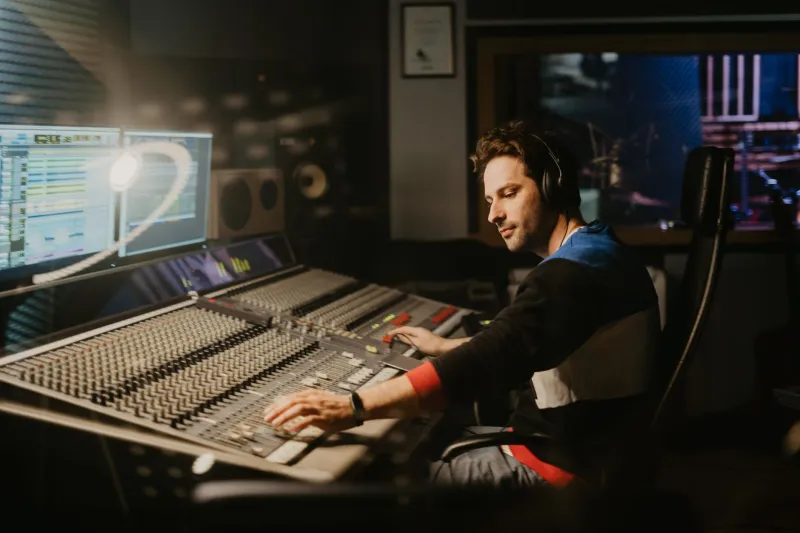
There is a moment in every tracking session when the room goes quiet, the red light comes on, and the performer lifts one headphone cup to ask: “Can I have a bit more of me?” It sounds like a small request. It is not. That one line is often the difference between a safe take and a great one, and UK engineers are increasingly treating the headphone mix as a proper part of the record-making process rather than a tangle of cables and afterthought.
The foldback feed — the cue mix, the cans, whatever you call it in your room — is the performer’s entire world while the tape is rolling. They cannot hear the room the way the engineer can. They cannot feel the drum riser through their feet. All they have is what comes down that cable, and if it is thin, muddy, click-heavy or just plain uninspiring, the performance will tell you. You can hear hesitation in a vocal. You can hear a bass player playing slightly behind because they are not sure where the kick is. You can hear a drummer overplaying to compensate for a cue mix that feels distant and small.
The old “more me” reflex
For years, the default approach in plenty of UK rooms was simple: give everyone a bit of everything, stick the vocal on top, add a splash of reverb, and deal with complaints as they come. It worked because it was fast. But speed is not the same as care, and a lot of engineers now argue that the cue mix deserves the same attention as the monitor mix in the control room.
“The headphone mix is the only mix the artist actually performs to,” says one London-based engineer who has spent the last decade bouncing between tracking rooms and small post-production suites. “If you get it wrong, you are not just annoying them. You are changing how they play. That is a technical issue and a creative one at the same time.”
That shift in language matters. Studios are not just asking whether the cue is loud enough. They are asking whether it feels good. Does the vocal sit in a place that encourages confidence? Is the click distracting or anchoring? Does the bass translate on headphones that cost £80 or £800? Can the performer hear the room ambience without feeling like they are singing in a cave?
What a good cue mix actually does
A great headphone mix is not simply a balanced stereo picture. It is a performance environment. In practice, that means a few things tend to matter more than others. The rhythm section needs to feel tight and immediate, especially kick and snare, because timing cues are harder to read on headphones than in a live room. Vocals need to be present without being so loud that pitch control goes out of the window. Reverb can be useful, but too much of it in the cue can smear timing and make singers feel disconnected from the track.
Stereo versus mono is another old argument that keeps rumbling on. Some performers love a wide stereo cue. Others find it disorienting. A lot of engineers now start mono, get the balance right, and then widen things carefully. If the mix only works when it is spread across two ears, it probably is not working that well in the first place.
Then there is the click. The click is a tool, not a personality. Some players want it loud and dry. Some want it tucked under the drums. Some want it only on the count-in. The trick is to ask, listen and adjust rather than assuming the default setting is a universal truth. A click that is too loud can make a performance stiff. A click that is too quiet can make a take drift. Neither is a gear problem. Both are cue problems.
Gear helps, but intention helps more
You do not need a fully networked personal monitoring system to deliver a decent cue mix. Plenty of UK studios still run headphone amps off aux sends and do a brilliant job. But the gear does make life easier when it is chosen with purpose. A decent distribution amp with enough clean headroom, headphones that are not falling apart, and a way to give each performer a separate balance are all worth more than another plug-in.
Personal mixing systems and digital desks have made separate cue mixes far more achievable in smaller rooms. That is a genuine shift. A singer can have their own blend while the drummer gets more kick and the guitarist gets the riff they are actually listening to. It also cuts down on the vaguely stressful game of translator between control room and live room. The engineer can focus on the sound, not on playing dispatcher for every “more me” request.
Latency is the other quiet killer. If the cue feels delayed, the performer will pull their punches without necessarily knowing why. Direct monitoring, low-latency interfaces and sensible buffer settings are not glamorous, but they matter. So does checking the headphones themselves. A pair with a hyped low end may flatter the track in the control room and lie to the singer about their pitch. The cue is not the place for a flattering lie.
The tea-break test
One of the best pieces of cue-mix advice I have heard is also the least technical: listen to the cue yourself before the performer arrives. Put the headphones on, stand where they will stand, and give it a minute. Does it feel like a song? Can you hear the groove? Is the vocal encouraging or exhausting? Would you want to sing into this for three hours?
That last question is the real one. UK studios are busy, budgets are tight, and time is always ticking. But a few extra minutes spent getting the headphone mix right can save a whole afternoon of comping cautious takes. The cue mix is not the glamorous part of the session. It is not the desk, the mic locker or the room with the famous reverb. It is the thing the artist actually hears. Treat it like it matters, and the performance usually will too.