The Desks That Outlived the Rooms
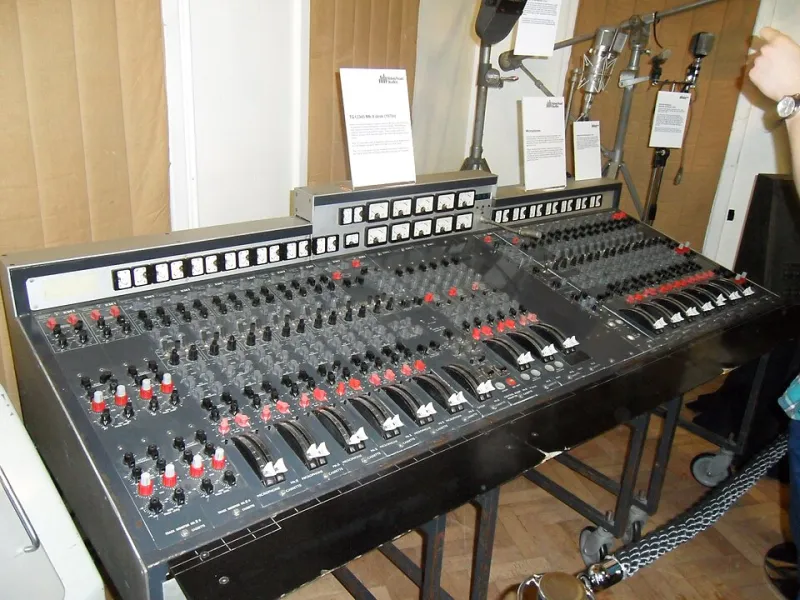
Photo: Josephenus P. Riley, CC BY 2.0, via Wikimedia Commons
There is a moment in every studio closure when the control room goes quiet and the desk becomes the most expensive piece of furniture in Britain. The monitors are unpatched, the tape machine has gone, and someone is kneeling behind the patchbay with a torch. That is usually when the phone calls start.
The migration of Britain's legendary consoles is not a single story. It is a treasure hunt with service manuals, bank transfers and a lot of van hire. Neve, SSL and EMI desks have left closed rooms for boutique studios, private collections and overseas facilities. Each move asks the same awkward question: can a desk keep its soul when it loses its room?
A desk is not furniture
Engineers talk about consoles as if they have personalities, and in a way they do. A vintage Neve is a set of decisions about transformers and gain. An SSL is a workflow, a computer with faders and a certain kind of punch. An EMI-era desk is a slice of British recording history, with custom metalwork and a mythology that travels faster than the schematics.
But a desk is also a system. It needs power, cooling, clean earth, spare channels and someone who knows which card fails when channel 17 gets warm. When a studio closes, the desk may be saved while the ecosystem around it is scattered. That is why the afterlives matter.
Bristol: the boutique rescue
Bristol has become a quiet hub for rescued desks. Small rooms, often run by engineers who cut their teeth in bigger facilities, have taken on consoles that would once have lived in a West End control room. The appeal is not nostalgia alone. A desk gives a room a sound and a story, and for clients it is a signal that the place is serious.
The reality is less romantic. A rescued console needs recapping, a service history and a room that can handle its heat. One Bristol engineer describes the first month of ownership as 'a second mortgage and a crash course in power supplies'. The desks that thrive are the ones with documentation, spare cards and a technician on speed dial.
The holding pattern
Not every desk lands in a working room. Some sit in storage, wrapped in sheeting, waiting for a building that may never arrive. Private collectors, retired engineers and canny dealers keep consoles in climate-controlled units or barns with dehumidifiers. It is a holding pattern that keeps the metal safe but the desk silent.
This is the less glamorous side of the migration. A console in storage is an asset, not an instrument. It can be sold again, broken for parts or restored when the right room appears. The danger is that the paperwork goes missing and the desk becomes a rumour with a serial number.
Overseas, and back again
Plenty of British desks have gone abroad. European rooms, American private studios and Asian collections have all taken on consoles with UK provenance. It is easy to read this as a loss, but the trade is older than the internet. Desks have always moved towards money and maintenance.
What changes is the context. A desk in a working UK room carries a local scene with it. A desk in a private collection may be perfectly restored and never make a record. The migration is not a simple exit; it is a relocation of value. Some desks return years later, bought back by engineers who remember them.
What actually travels
When a desk moves, the important stuff is often in cardboard boxes: schematics, mod notes, channel lists, service invoices and the phone number of the person who last aligned it. The engineers who rescue consoles are often archivists by accident. They know that a manual is worth as much as a module.
For anyone buying a vintage desk in 2026, the advice is unglamorous. Budget for service, power and cooling. Ask for service records. Test every channel if you can. Check whether the room can take the weight and the heat. Do not buy a legend you cannot maintain.
The soul question
The great console migration says something about British recording that is uncomfortable and hopeful. The rooms can close, the buildings can become flats and the desks can cross oceans. But the knowledge around them is stubborn. It lives in engineers who can still read a patchbay and in small rooms that refuse to give up.
The desks will outlive most of us. The real question is whether Britain can keep enough working rooms to keep them working.