The Last Fifty Metres: Getting Your Kit Into a UK Studio Without Losing the Morning

Photo: NASA / Goddard Space Flight Center / Arizona State University, Public domain, via Wikimedia Commons
The first thing that happens on a session day isn't a kick drum. It's a van door rolling open on a street that turns out to be narrower than the one in your head, with a traffic warden two cars back and a flight of stairs that wasn't in the photos.
Studios sell rooms by the hour. Artists buy them by the day. The gap between those two things is usually the last fifty metres — the bit between the kerb and the live room door — and it is where more sessions quietly lose their first hour than anywhere else.
The session starts at the kerb
A ten o'clock booking means ten o'clock in the control room, not ten o'clock somewhere near a corner shop in a neighbouring postcode trying to work out whether the double yellow applies to loading. If your booked time begins at ten, your day begins at half eight, and the two hours in between are the least glamorous and most consequential part of the whole record.
This isn't about being precious. It's arithmetic. A studio that charges £350 a day has just watched £60 of it evaporate while you reverse into a bay that's half occupied by a scaffold lorry. A producer who wanted to have drums up by noon is now looking at a quarter past one. Everyone stays polite, but the clock has already had its say.
Check the van before you check the room
Most UK cities now have some version of a charging zone, and hire vans are the classic trap. London's ULEZ takes £12.50 from a non-compliant van up to 3.5 tonnes; the Congestion Charge is around £18 and applies 07:00–18:00 on weekdays and 12:00–18:00 at weekends and on bank holidays. Birmingham, Bristol and Bradford run Clean Air Zones with their own charges and their own hours. Glasgow, Edinburgh, Dundee and Aberdeen enforce Low Emission Zones, where the penalty starts at £60 and doubles on each subsequent breach. Take a note of the registration plate before you pay for the hire, put it into the relevant council or TfL checker, and do it while you're still at the counter. A 2014 diesel Luton that seemed like a bargain can clear £100 in charges before it has carried a single microphone.
Set up the charge payment the night before if you can. There is something uniquely demoralising about paying a penalty because you were loading a bass amp and forgot a web form.
Permits, bays and the yellow line gamble
Controlled parking zones are the other great British obstacle. Many councils sell visitor permits by the day, and most will suspend a bay on request — but the notice period is often five to ten working days, and the fee is real. Studios in busy areas sometimes hold trade permits or a standing arrangement with the local authority; ask, because they often don't advertise it.
Learn the difference between the yellow lines, because the signage will not explain itself under pressure. Double yellows mean no waiting at any time, and loading is only allowed if there are no kerb blips or dashed markings on the edge of the carriageway. Single yellows restrict waiting during the hours on the nearby plate, and loading is often fine. Red routes are their own ecosystem, camera-enforced, with strict loading windows and very little sympathy. And a bay that says "loading only" between 08:30 and 18:30 is not a suggestion.
The going rate for a parking ticket in London is around £130 to £160 depending on the borough and the road, halved if paid within a fortnight. A tow and release on a red route can comfortably clear £300 before you've found a taxi to the car pound. Compare that to the cost of an actual permit and the economics arrange themselves.
Stairs, lifts and the half-landing of doom
Ask for the door width, the stair count, and the lift dimensions in writing. Not because studios are hiding anything, but because "ground floor" and "easy access" mean different things to different people. A 900mm door and a 750mm flight case don't negotiate. A lift rated for four people is not a lift rated for a Fender Twin and two crew.
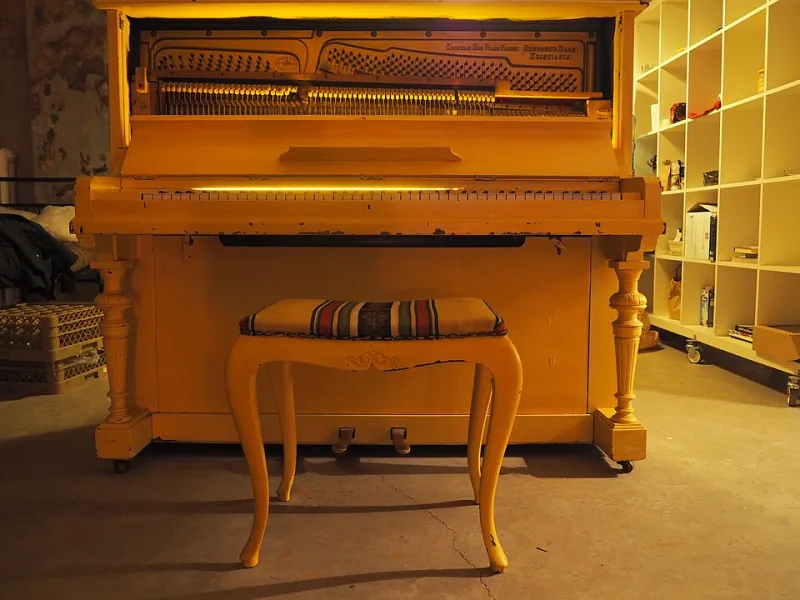
Rooms in railway arches come with low headroom and sometimes a lip at the threshold. Converted Victorian terraces come with a dogleg half-landing that will take a drum kit apart and reassemble it on the way up. Basement rooms have a turn at the bottom that a piano will not make unless it is vertical and brave. None of this is a reason to avoid a studio — it's a reason to know before you book the van, so you can bring the right number of people and the right trolley.
The 4pm problem
Kerb space is a shared resource and it disappears at predictable times: the school run, bin day, market days, theatre crowds, match days, and the hour when every white van in the borough decides to make a delivery. If your load-out is going to land at half four, assume the street will be busier than it was at ten. Studios that host evening sessions often build their day around this and will happily shift your load-out earlier. Take them up on it.
A load-in checklist you can screenshot
- Measure your largest case, add 100mm, and ask the studio whether it fits through the door and up the stairs.
- Request the door width, stair count, lift dimensions and any turning points in writing, ideally with a photo from the street.
- Ask the studio about parking: permits, suspended bays, nearby car parks with height barriers, and how long a suspension takes.
- Check the van's registration against the relevant ULEZ, CAZ or LEZ checker before you hire it.
- Pre-pay the Congestion Charge if you're heading into central London.
- Photograph the bay sign and the road markings. If someone questions you later, you'll want the evidence.
- Book a load-in slot, not just a session start, and tell the studio how many people are coming.
- Bring a trolley, straps and one extra pair of hands. The friend who can carry a bass cab is worth more than the friend who can only carry opinions.
- Keep the driver within sight of the van, or leave someone with it. Nothing extends a load-in like a trip to the pound.
If you run a studio, publish an access sheet
There's a commercial argument here, not just a courteous one. A studio that publishes its access reality — door width, stair count, lift size, nearest loading bay, height restrictions, permit options and whether staff will help carry — gets fewer panicked phone calls and more repeat bookings. Artists talk to each other, and the room that told the truth about the stairs is the room they trust with the rest of the day.
Put a photo of the entrance on the website, taken from the road, at eye level. It answers more questions than a paragraph ever will.
The last word
The best load-in is the one nobody remembers. Kit in, van moved, coffee made, first take by eleven. It isn't rock and roll, but it is the reason the rock and roll gets finished on time.