The Upright in the Corner: A Stewardship Guide for Studio Pianos
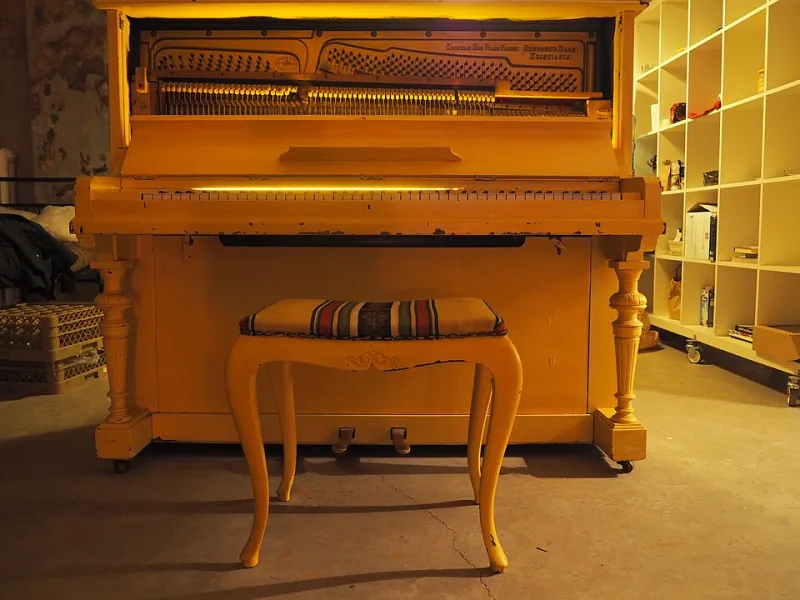
Photo: Unknown authorUnknown author, CC0, via Wikimedia Commons
Every studio has one. Maybe it came with the building, maybe it was left behind by a band who swore they’d collect it, or maybe it was bought in a burst of optimism after a particularly good month. The house piano sits in the corner of the live room, gathering dust sheets and compliments. It is not furniture. It is a piece of machinery with strings under tension, a wooden body that reacts to the British weather and a reputation that can quietly shape whether an artist books your room again.
The Piano You Inherit Is Not the Piano You Promised
A studio piano has two lives. There’s the instrument itself — the action, the soundboard, the tuning pins, the pedals — and there’s the promise attached to it. Artists see “piano” on your gear list and imagine a warm upright for a ballad, a honky-tonk layer for a rock track or a quick idea-catcher in the live room. What they get depends on how well you’ve maintained the thing.
That gap between expectation and reality is where bookings go sour. A modest Yamaha U1 that’s tuned, regulated and kept away from a radiator will often serve a session better than a grand with a sticky action and a brittle top end. Stewardship isn’t about owning a prestige instrument. It’s about knowing exactly what your corner piano can do, and being clear with clients when it can’t do the thing they’ve heard in their head.
Tuning Is a Schedule, Not a Panic Button
Most UK studios should think in terms of a tuning schedule rather than a tuning emergency. A busy room that gets regular piano work might need two visits a year, plus a check before any session where the piano is central. A quieter room with stable temperature and humidity can sometimes stretch to an annual tuning, but “sometimes” is doing a lot of work in that sentence. An upright that has just come through a damp autumn and a centrally heated winter will not necessarily hold pitch the way it did in July.
A tuning is also a useful health check. A good piano tuner-technician will notice sluggish keys, loose tuning pins, pedal squeaks and the early signs of a cracked soundboard before they become session-ruining problems. Build that relationship now, not the week before a client arrives with a string arrangement and a tight schedule. The tuner who knows your building’s quirks is worth more than a cheap one-off visit from a directory.
Humidity Swings Are the Real Enemy
British weather is not kind to wooden instruments. Victorian terraces, converted warehouses and listed buildings all bring their own microclimates, and a piano in a live room is often sitting in the path of a draught, a radiator or a door that gets propped open during load-in. The instrument doesn’t need a laboratory. It needs consistency.
A hygrometer in the piano’s corner is a cheap place to start. Keep the room within a sensible range and avoid violent swings. Don’t park the upright against an outside wall that sweats, don’t let the radiator cook it from two feet away and don’t assume a dust sheet is protection from anything other than dust. If the room has a dehumidifier for the gear, the piano benefits too. If the building has a damp problem, fix the building before you spend money on voicing.
Insurance, Access and the Awkward Questions
A house piano is studio equipment, even if it feels like part of the fixtures. Check that it’s listed on your insurance policy as a specified item if its value justifies it, and understand what happens if an artist knocks over a mic stand, spills a drink or decides to “prepare” the strings with whatever is in their pocket. Accidental damage cover is one thing; careless use is another. Your terms should say who is responsible for what, and your session setup should make the piano easy to use without encouraging chaos.
Keep the lid closed when it isn’t in use. Keep drinks off the top. Make sure the castors are sound and the piano isn’t going to move when someone leans on it during a take. If the instrument is in a room used for drum tracking, think about whether it needs a cover that actually protects it from dust and debris, not just a decorative sheet.
When to Say No to a Piano Session
This is the part studio owners avoid. A piano can be a lovely thing to have and still be the wrong instrument for a particular booking. If the action is heavy, the tuning is unstable, the pedals are noisy or the top octave sounds like a cutlery drawer, don’t let a client book it as a featured instrument without a conversation. Offer a workaround: a digital piano for writing, a hired upright for the day, or a local technician visit if there’s time.
Saying no isn’t a failure of hospitality. It’s better than watching a pianist fight an instrument for six hours and leave with a take nobody wants to hear again. The studios that get repeat piano work are usually the ones that are honest about the piano’s condition and ruthless about keeping it session-ready. The corner instrument can be a booking asset. It just needs someone to treat it like one.