Who Owns the Take? The AI Clauses Showing Up in UK Studio Paperwork

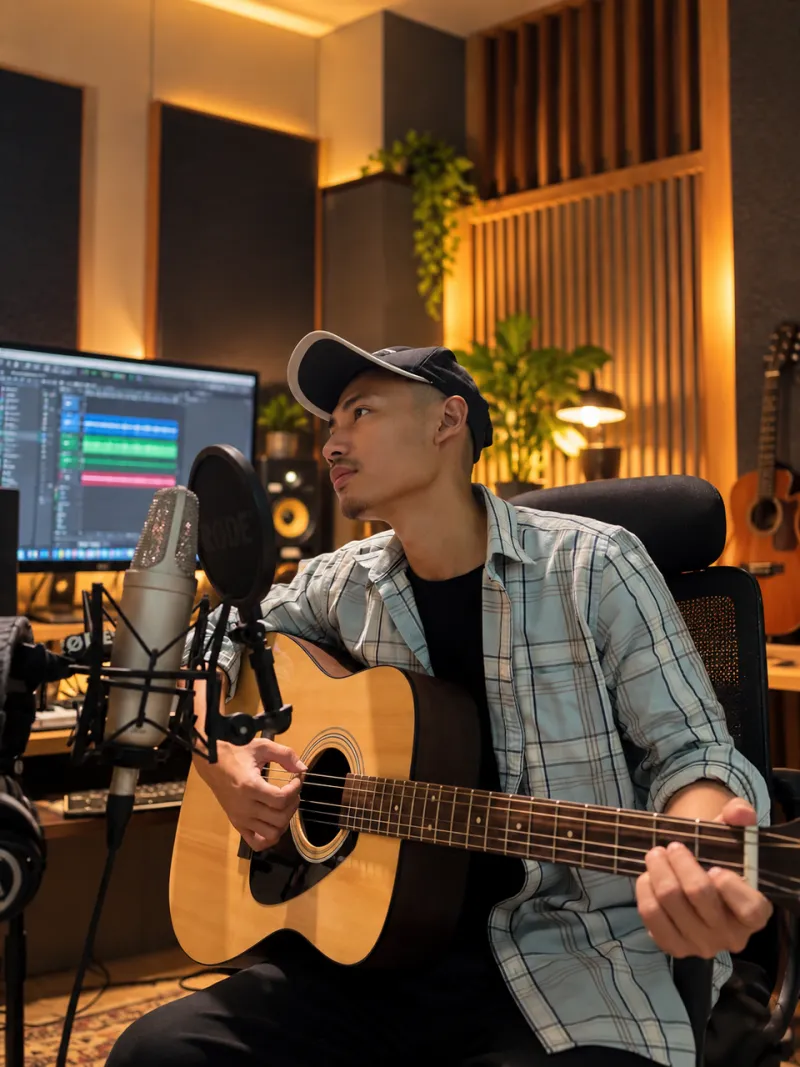
Photo by Photo by James Kovin on Unsplash on Unsplash
A session used to end with a hard drive, a reference mix and a handshake. In 2026, it often ends with a second document. The AI addendum is quietly becoming part of the paperwork in UK studios, and it is asking questions that nobody had to answer five years ago.
Who can use the stems? For how long? Can a performance be used to train a model? If a model generates a new vocal take from a session singer, who gets credit — and who gets paid? These are not abstract debates. They are landing in contracts for £250 overdub days and £2,000 mix sessions alike.
The hard drive used to be the end of the story
For most independent artists, the multitrack was the master. You paid for the room, you left with the files, and what happened next was your business. That model still works, but only if the contract says so.
The new clauses tend to appear in three places. The studio’s standard terms, the producer’s deal memo, and a separate AI schedule that gets sent with the booking confirmation. Some are broad. Some are careful. The broad ones grant the studio a licence to use anonymised stems for machine-learning research. The careful ones separate client deliverables from studio research and require a separate opt-in for training.
The difference matters. A session player in Manchester might be happy for their bassline to sit in a mix. They may be less happy for it to become part of a model that generates basslines for other people. Those are two different permissions, and the paperwork should say so.
Consent has to be granular
Blanket consent is the thing to watch. A clause that says the studio may use recordings for ‘development and improvement of services’ is vague enough to cover almost anything. A professional room will break it down. Can the stems be used for internal testing? Can they be used to train a model? Can the resulting model be used commercially? Can it be used to create a synthetic version of a named performer?
The answers should be separate boxes, not one signature at the bottom of a page. Session players and featured artists should know whether their voice or playing can be modelled. Producers should know whether their mix can be used as training data. If the contract cannot answer those questions, it is not ready for a 2026 session.
Retention is a creative decision
File retention is the other quiet issue. Some rooms keep multitracks indefinitely for backup, portfolio or future remix work. That can be useful. It can also become a library of performances that were never meant to be reused.
A sensible AI schedule sets a retention period. Twelve months for active projects, archive after that, deletion on request. It also says who can access the files and what happens when a client asks for them to be removed. The best rooms treat retention as part of the service, not a data grab. They tell the artist what is being kept, where it lives and how to get it back.
Credit and metadata travel together
If a model-generated version of a performance is used, credit terms need to travel with it. A line in the contract is not enough if the metadata does not follow the file. Stem-level metadata — session date, performer, instrument, project — is becoming a practical way to keep credit attached when files move between systems.
The professional rooms are starting to use file-naming conventions and embedded notes that make the chain of authorship obvious. That is not glamorous work. It is the difference between a credit that survives and a credit that disappears the moment the session is exported.
What professional rooms are doing
Three practices are separating the well-equipped room from the professional one. First, a separate AI addendum that is explained, not buried. Second, an opt-in training clause that is genuinely optional. Third, a clear statement that the client owns the masters while the studio gets a limited licence for backup and portfolio use.
That last point is crucial. A studio can be helpful without owning the training rights to your session. A producer can use AI tools without claiming the right to model a session player’s performance. The paperwork should make that distinction obvious.
The questions to ask before you sign
Ask what is being retained and for how long. Ask whether the stems can be used for training, and whether that consent can be withdrawn. Ask who owns model-generated outputs and how credit will be handled. Ask whether the studio uses AI tools in the mix or production process, and whether those tools touch your files.
If the answers are vague, ask for them in writing. The well-equipped room has good monitors. The professional room has a paper trail. In 2026, the paper trail is part of the sound.